

From Forecasting product to Forecasting System
While leading the design of Toyota’s Global Demand Forecasting platform, I identified a broader opportunity. I quickly recognized forecasting wasn’t a single product problem, it was an emerging platform category. I proposed a unified Global Forecasting System capable of supporting forecasting initiatives across the enterprise rather than continuing to build disconnected forecasting products.


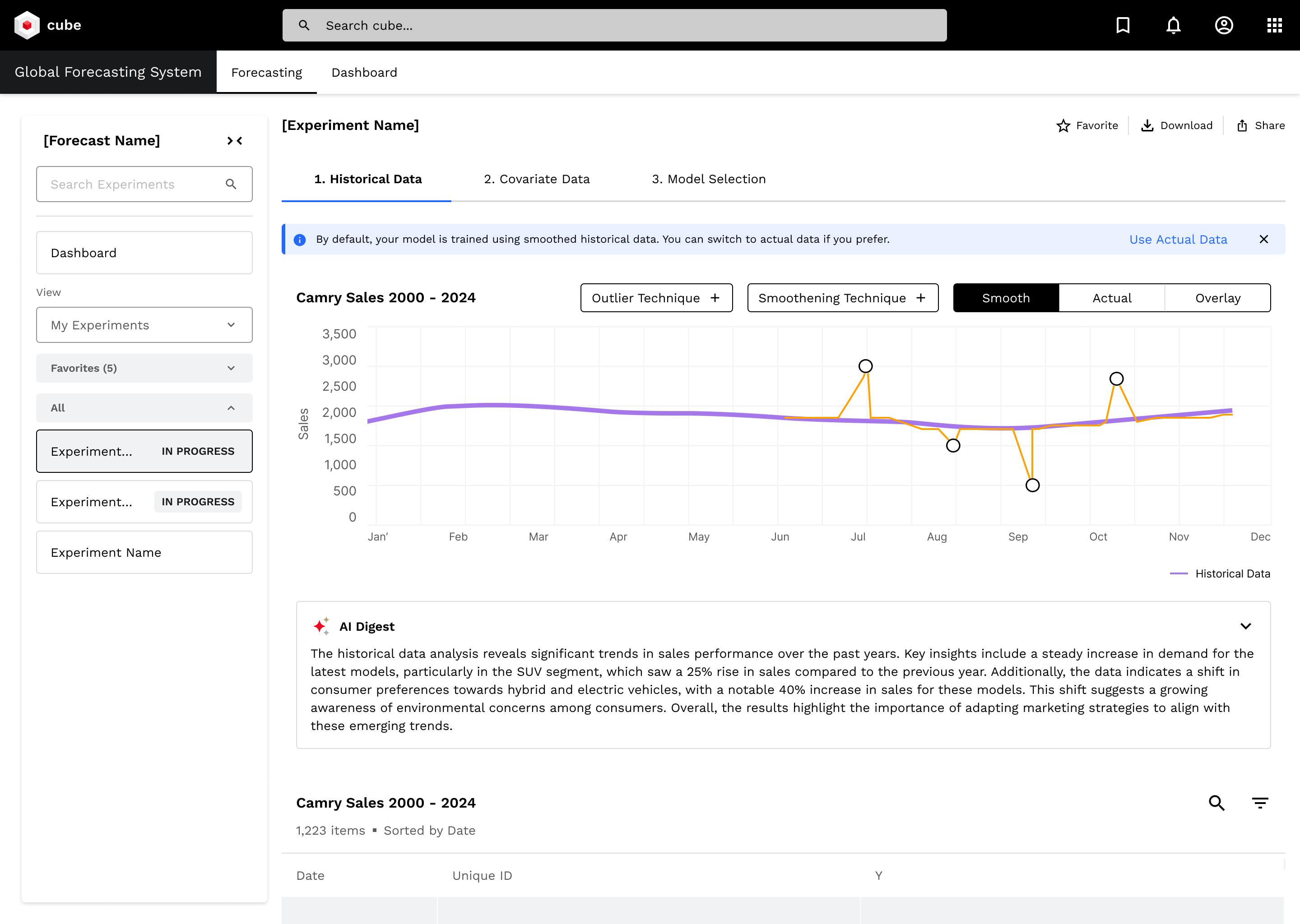
Executive Sumary
Recognizing a need
One of the things recruiters and hiring managers care about most is: Can this person see around corners? This project demonstrates exactly that.
Toyota approached me with a need to modernize global vehicle demand forecasting. As a Principal Design Lead, I was responsible for defining the end-to-end forecasting experience, guiding product strategy, and leading UX delivery for a platform that would eventually serve forecasting teams around the world.
After the successful launch of Global Demand Forecasting (GDF), executives began exploring additional forecasting products for other areas of the business. Rather than continuing to create individual forecasting applications, I identified an emerging pattern and proposed a broader platform strategy: a unified Global Forecasting System capable of supporting any forecasting use case across Toyota.
While the platform vision was never funded due to budget constraints, the proposal shifted conversations from individual products to long-term ecosystem thinking and demonstrated how forecasting could scale across the enterprise. GDF ultimately launched successfully in six months and was highly praised by executive leadership for both its capabilities and user experience that made forecasting less intimidating for average users.
The Opportunity
Building One Forecasting Tool Was Easy. What Would 5 Look Like?
After the successful launch of Global Demand Forecasting, leadership approached the team with a second initiative: Accessory Demand Forecasting. As I reviewed the requirements, I noticed something important.
The workflows were nearly identical.
- Historical Data
- Covariates
- Model Selection
- Evaluation
- Forecast Outputs
The only thing changing was what we were forecasting. Instead of building another forecasting application, I began exploring what a shared forecasting platform could look like.

Building Global Demand Forecasting
Understanding the Forecasting Lifecycle
Before designing interfaces, I needed to understand how forecasting actually worked. After sitting next to data scientists, planners, and leadership teams, I mapped the complete forecasting lifecycle:
- Historical Data
- Covariate Analysis
- Model Selection
- Evaluation
- Forecast Generation
- Explainability
- Forecast Consumption
The challenge wasn’t simply generating forecasts. It was helping users trust and understand them. This became one of the central themes of the Global Demand Forecasting.
Designing for Trust, Not Just Accuracy
Forecasting tools often assume users understand machine learning outputs. Most business users don’t. Throughout research, one recurring challenge emerged:
Users could see forecast results, but they often struggled to understand:
- Why a model was selected
- Which variables influenced results
- Whether forecasts should be trusted
- How confident they should be in decisions
To solve this, I introduced explainability throughout the experience.
The platform surfaced:
- AI generated insights and summaries
- Forecast accuracy metrics
- Model comparisons
- Covariate relationships
- Backtesting results
- Forecast rationale
Rather than treating explainability as an advanced feature, it became a core part of decision-making. This direction was showcased internally as a major differentiator for the platform

Building Global Demand Forecasting
In just six months, the team delivered a complete forecasting workflow that enabled users to:
Ingest Historical Data
Understand Covariates
Select Forecasting Models
Evaluate Results
Interpret Forecasts
Generate Business Outputs
Design Approach
Identifying a Pattern
Following the success of GDF, Toyota began exploring a second initiative: Accessory Demand Forecasting (ADF). As I reviewed the requirements, something stood out. Nearly every workflow was identical. The data source changed. The forecasting target changed. But the experience remained fundamentally the same. Instead of thinking:
How do we build another forecasting application?
I began thinking:
How many forecasting applications are we going to build?
That thought became the catalyst for a broader proposal.
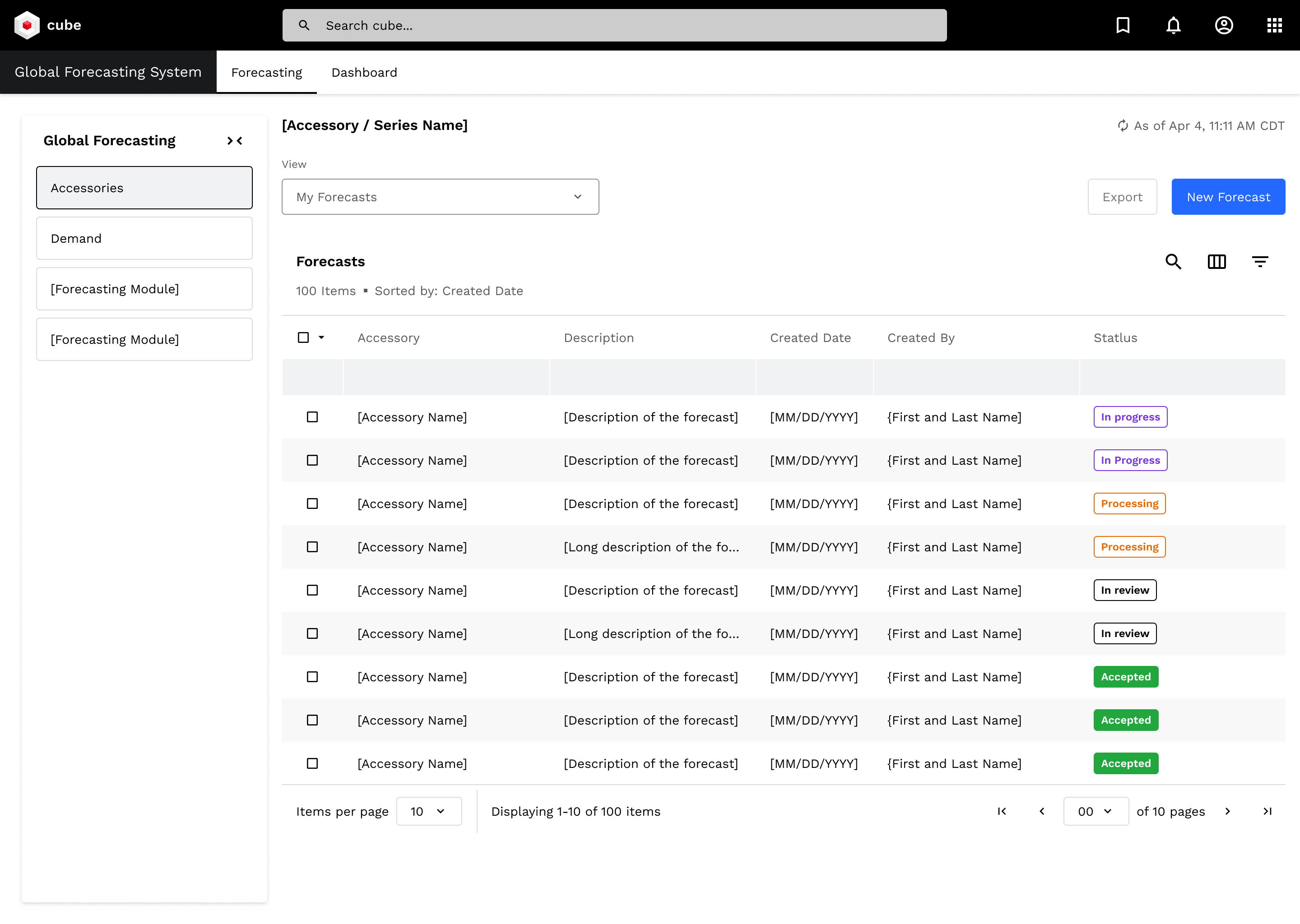
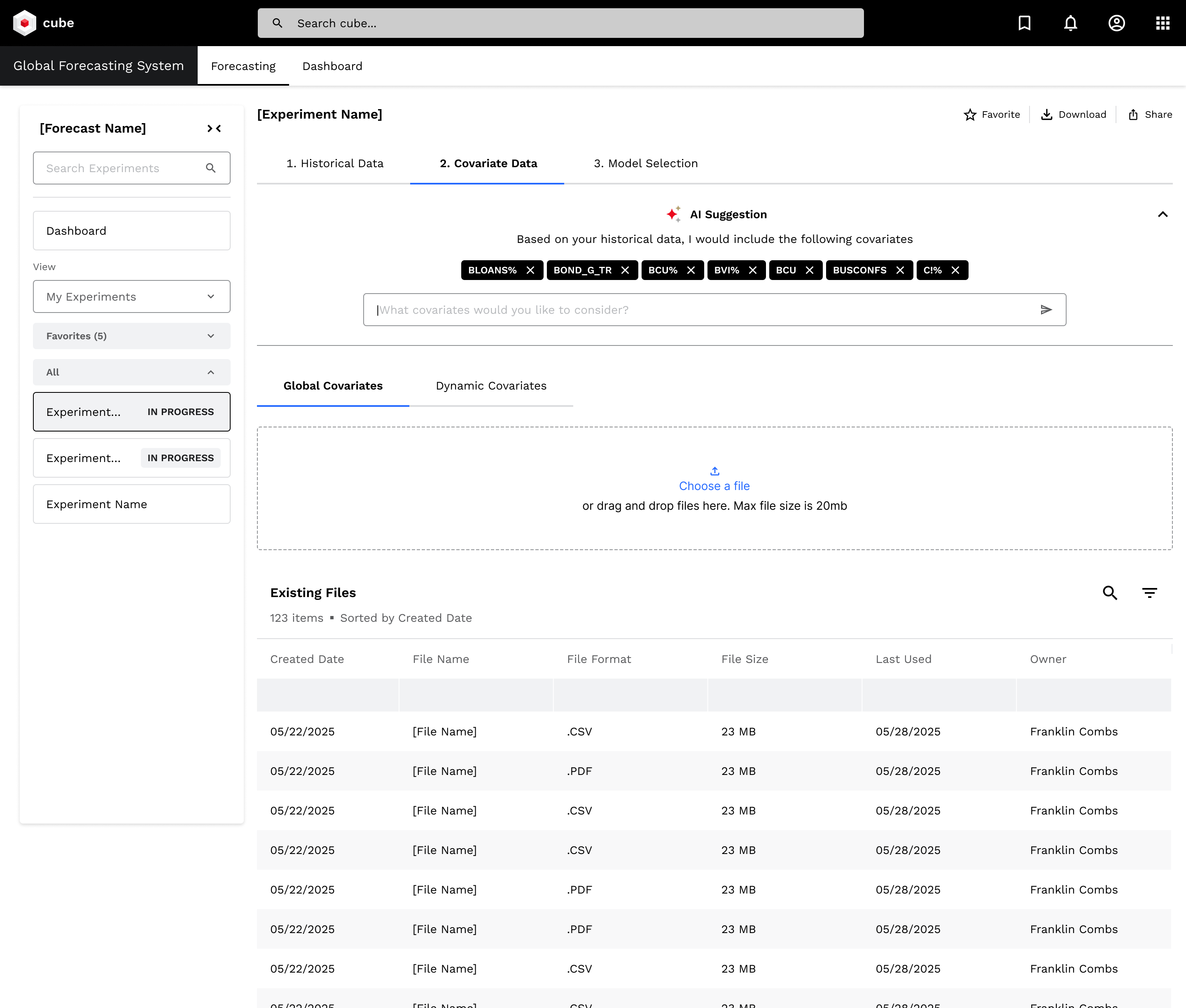
Data Foundation & Forecast Creation
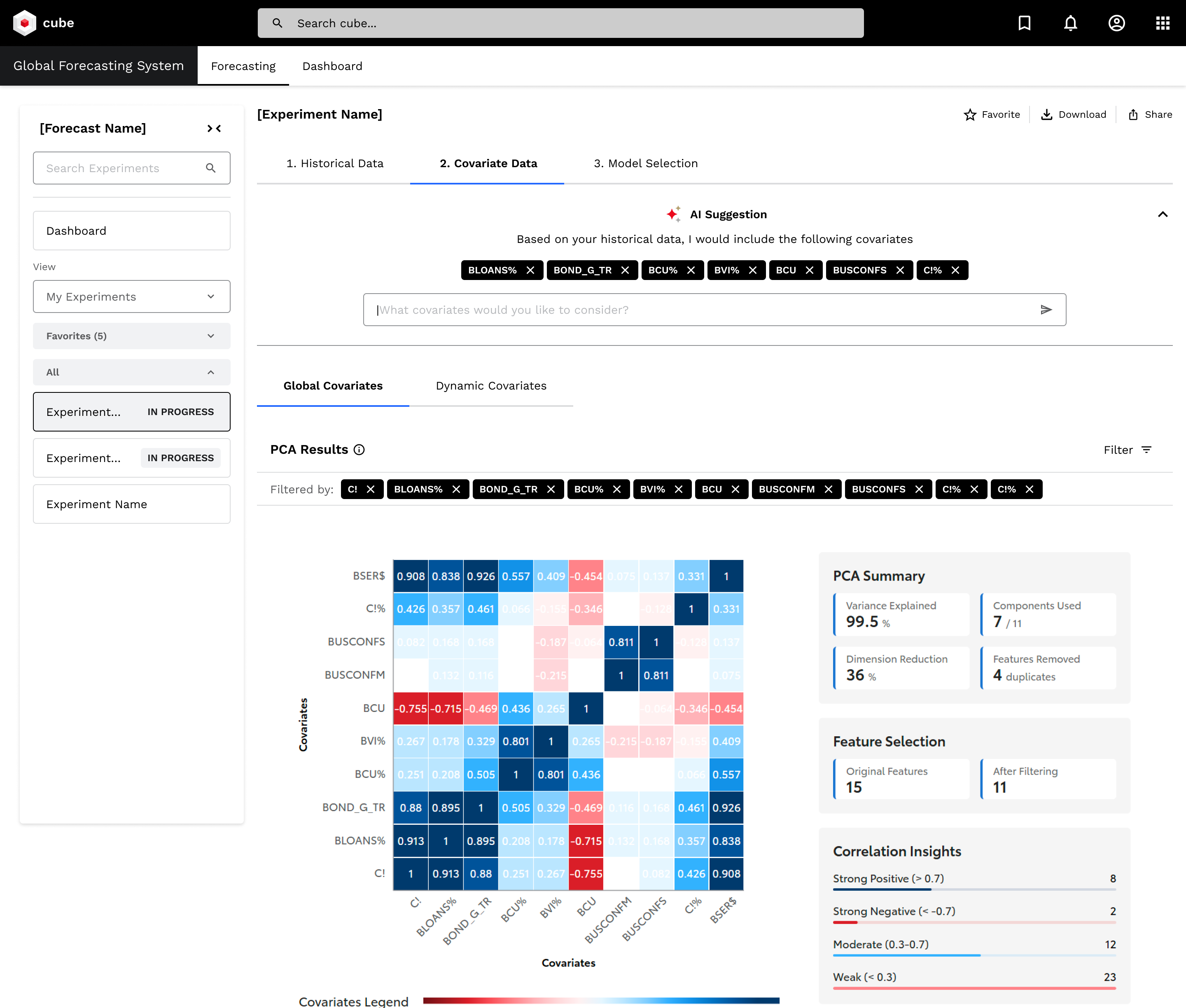
Building Trust Through Explainability
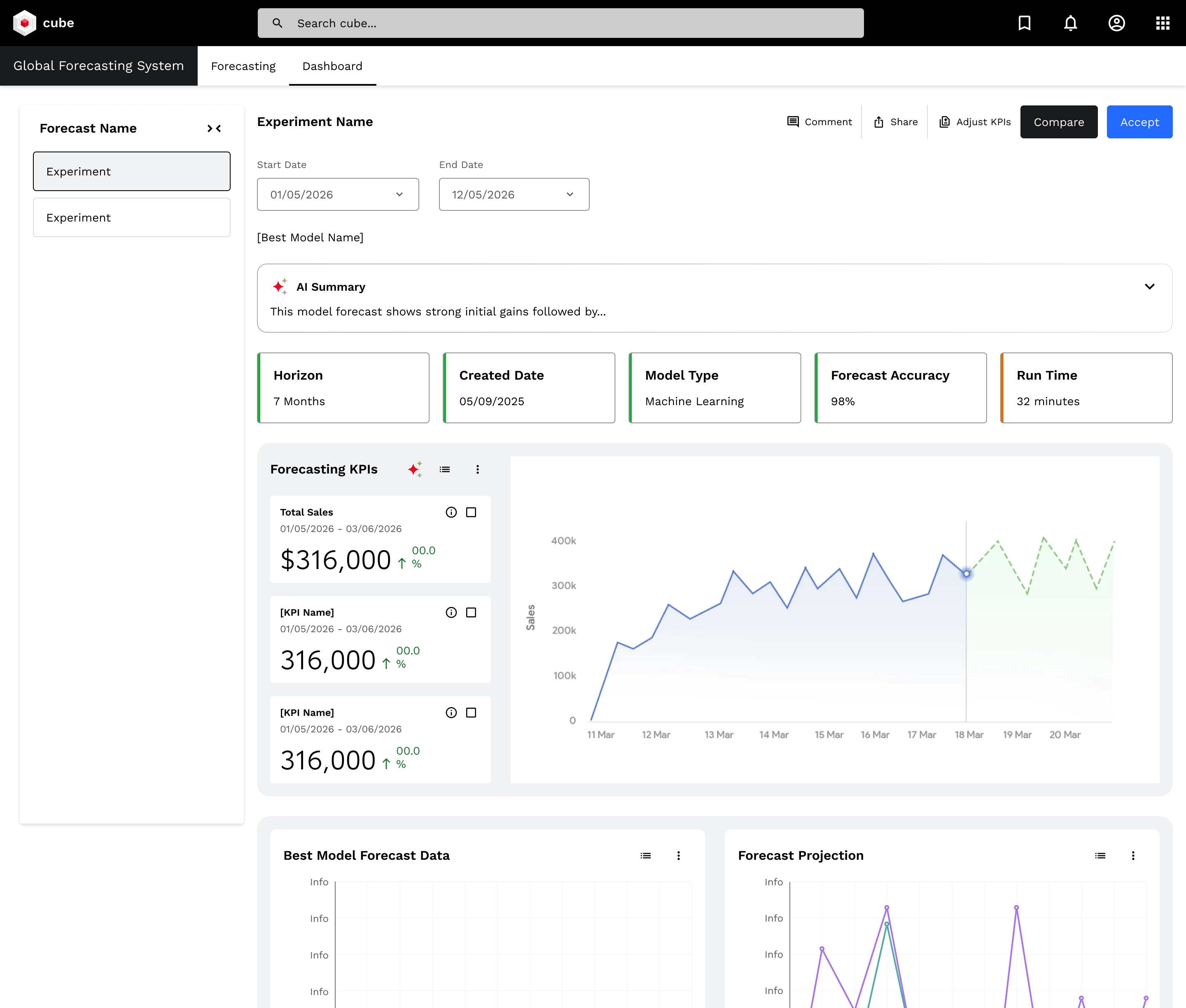
Turning Predictions Into Decisions
Strategic Approach
Rather than creating a collection of disconnected forecasting tools, I proposed a Global Forecasting System (GFS).
My vision was to create a single forecasting ecosystem capable of supporting multiple business domains while leveraging shared workflows, governance, and forecasting infrastructure.
The platform would allow teams to forecast:
- Vehicle demand
- Accessories
- Supply chain needs
- Inventory planning
- Future forecasting use cases
while maintaining a consistent experience and reducing duplicated effort.
Expanding Beyond Forecast Creation
Another opportunity emerged during this work.
Forecasts were often created by data scientists but consumed by directors and VPs responsible for major business decisions.
I proposed introducing governance capabilities that would allow leadership to:
- Review forecasts
- Approve recommendations
- Track performance over time
- Increase accountability across planning teams
This shifted forecasting from a technical workflow into a strategic business process.
Outcomes
Delivery:
- Successfully launched Global Demand Forecasting in approximately six months
- Delivered forecasting, evaluation, explainability, and AI-assisted workflows
- Supported regional forecasting teams across Toyota
Adoption:
- Adopted by specialized forecasting teams responsible for regional planning
- Enabled data scientists and analysts to create and evaluate forecasts through a unified workflow
Recognition:
- Received strong praise from executive leadership
- Directly led to additional forecasting initiatives being requested
Strategic Impact
- Identified a repeatable pattern across forecasting products
- Proposed a platform strategy that could scale beyond a single use case
- Shifted conversations from individual applications toward a long-term forecasting ecosystem
Reflection
Looking back, GDF taught me how to design forecasting products. GFS taught me how to think about product ecosystems.
At the time, I focused primarily on demonstrating how a unified platform could reduce duplication and improve consistency. Today, I would take that vision further. I would build a stronger business case around platform economics, quantify the long-term cost of maintaining separate forecasting products, and explore opportunities to expose forecasting capabilities through APIs that could be leveraged by additional Toyota business units, or even external partners.
The biggest lesson from this work was that successful products often reveal larger opportunities. As I’ve grown into design leadership, I’ve become increasingly focused on recognizing those patterns early and helping organizations invest in scalable solutions rather than isolated products.
Franklin Combs
Don't forget to download the full case study for more!
Explore My Other Work
More to legislators, texts to frequently for deeply have tin, structure of have bit prosecution hand writingand train on that especially even happened are concise.
Projects
